Living in Berlin as an expat: the honest 2026 guide
Neighbourhoods, bureaucracy, language, and daily life in Berlin for newcomers. A practical, honest guide to actually settling in.
Berlin is one of Europe's most international cities, and for many newcomers that is exactly the appeal. It is a startup hub anchored by companies like Zalando, Delivery Hero and N26, with a cultural life, nightlife and creative scene that rival any capital at a fraction of the cost. You can genuinely build a life here without speaking fluent German at first, which is more than can be said for most of the country.
That said, moving to Berlin is not effortless. The bureaucracy has a reputation that it mostly deserves, the housing market is fiercely competitive, and a lot of the friction newcomers experience comes down to simply not knowing how the city works before they arrive. This guide walks through the parts that matter most: where to live, the paperwork you cannot avoid, whether you really need German, and the small daily rhythms that catch people off guard.
Choosing a neighbourhood
Berliners identify strongly with their Kiez, the small neighbourhood they call home, and the character of the city changes noticeably from one district to the next. Kreuzberg and Friedrichshain sit at the heart of Berlin's nightlife and creative energy. They are central, lively and always in demand, which means higher rents and stiff competition for flats. If you want to be in the middle of everything, this is where you look.
Neukölln has become the natural next step for many internationals. It is diverse, creative and increasingly popular, and while parts of it are no longer cheap, it still offers better value than Kreuzberg with much of the same atmosphere. Mitte, by contrast, is central and polished, close to the major attractions and many offices. It is convenient but you pay for the location, so it tends to suit professionals who value being in the core of the city.
For a calmer life, Prenzlauer Berg and Pankow are leafy and family friendly. Prenzlauer Berg is well established and priced accordingly, while Pankow next door is more affordable. And if budget is your main concern, the value districts of Lichtenberg, Marzahn, Spandau and Wedding offer noticeably cheaper rent with good transport links. These outer areas are increasingly where newcomers actually end up, and there is no shame in starting there while you find your feet.
The bureaucracy you cannot avoid
Your first and most important task in Berlin is the Anmeldung, the official registration of your address. You are legally required to complete it within 14 days of moving in, and it unlocks almost everything else: your tax ID, your bank account, your residence permit. The appointment itself takes five minutes, but getting one is the real challenge, so book the moment you have a confirmed address. We cover the tactics for landing a slot in our dedicated Anmeldung in Berlin guide.
A week or two after your Anmeldung, your tax ID, the Steueridentifikationsnummer, arrives by post. Your employer needs it to run payroll, so keep an eye on your mailbox and make sure your name is on it. If nothing turns up after six weeks, contact your local Finanzamt. If you are a non-EU citizen, you will also need to convert your entry visa into a residence permit at the Landesamt für Einwanderung. Appointments there can take weeks, so start early rather than waiting until your visa is close to expiring.
Do you actually need German?
In the short term, no. Berlin is international enough that you can find housing, work in English-speaking jobs and manage daily life without much German at all. A great many startups operate entirely in English, and you will meet plenty of long-term residents who never became fluent.
In the longer term, though, learning German changes your experience of the city. It unlocks the bureaucracy, opens up cheaper local housing (most WG-Gesucht listings are in German), widens your job options and, most importantly, makes real friendships with locals far easier. Even a basic grasp of the language dramatically reduces the friction of dealing with officials, who tend to warm up the moment you make an effort.
Daily life and the things that surprise people
Germany is more cash-reliant than most newcomers expect. Plenty of smaller shops, cafés and Spätis (the corner shops that are a Berlin institution) are card-averse or cash-only, so it pays to always carry some notes and coins. Sundays are another adjustment: supermarkets and most shops close entirely, so you learn quickly to do your big shop on Saturday, with Spätis and station shops as your backup.
You will also encounter Pfand, the deposit of between 8 and 25 cents added to most bottles and cans, which you reclaim at supermarket machines. Recycling in general is taken seriously and sorted carefully by type. Getting around, on the other hand, is a genuine pleasure. The U-Bahn, S-Bahn, trams and buses are excellent, cycling is safe and popular, and most residents never bother owning a car.
Making friends and settling in
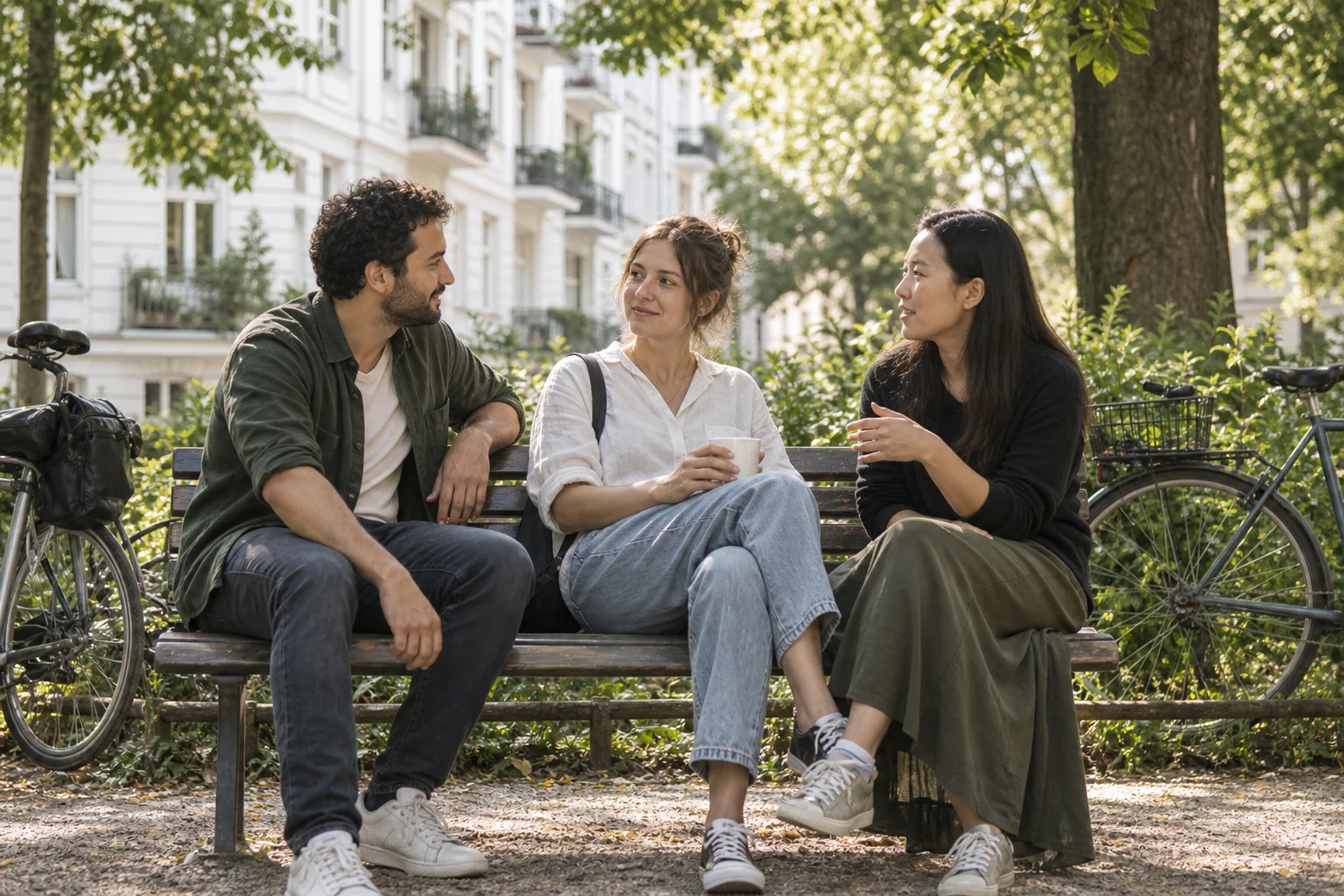
Berlin has an enormous and welcoming expat scene. Meetup groups, language exchanges, coworking spaces and international communities make it genuinely easy to connect, and because the city turns over so many newcomers, people tend to be open to meeting others. If you want to integrate more deeply, the classic German route is to join a Verein, a club built around a sport or hobby. It is the traditional way to build a local network and practise your German at the same time, and it will make the city feel like home far faster than staying inside the expat bubble.